
Mohsin Naqvi remains one of the most celebrated names in Urdu poetry, remembered for a voice that turned pain, separation, and longing into timeless verses. Born in Pakistan and active through the 1970s and 80s, his work carried a rare emotional honesty that connected deeply with readers from all walks of life. Over the years, he penned several collections that captured the depth of his thoughts and feelings, each book adding a new layer to his literary legacy. This article explores the five iconic books that defined Mohsin Naqvi’s poetry and shaped his lasting place in Urdu literature.
Who Was Mohsin Naqvi—A Brief Biography
Mohsin Naqvi was born on 10 May 1947 in Dera Ghazi Khan, a city in Punjab, Pakistan. Originally named Ghulam Abbas, he later adopted the pen name Mohsin Naqvi, by which he became widely known. He came from a Syed family, with his father working as a saddle-maker and food vendor. He completed his early education in Multan and went on to earn a master’s degree in Urdu from the University of the Punjab, Lahore. Over the years, he became known for a poetic voice often associated with themes of loneliness, longing, and heartfelt emotion, blending romance and sorrow in a style that resonated deeply with readers. His life came to a tragic end on 15 January 1996, when he was assassinated in Lahore, but his poetry continues to be remembered and recited across Pakistan to this day.
Bandeh Qaba—His Debut Poetry Collection

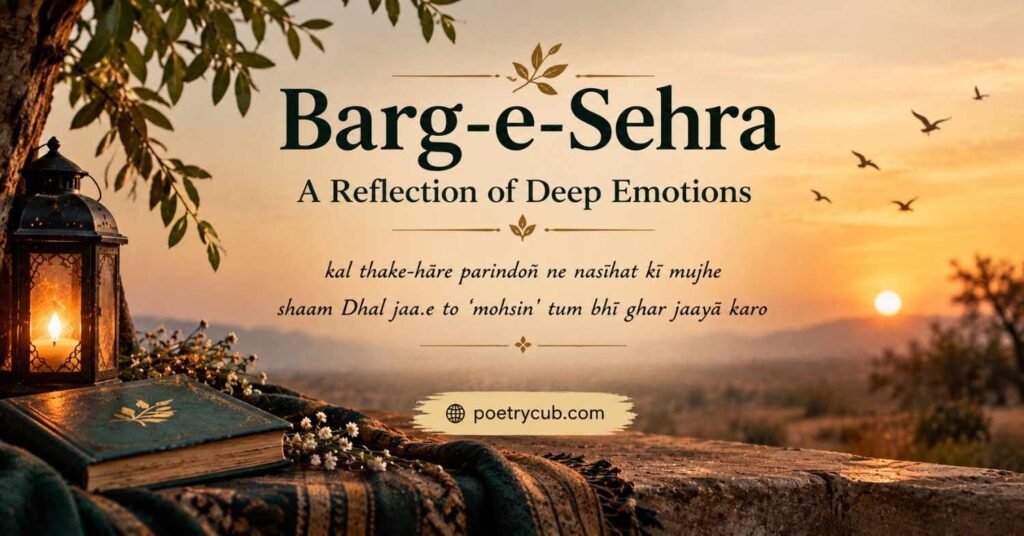
Barg-e-Sehra—A Reflection of Deep Emotions
Barg-e-Sehra reflects a more introspective side of Mohsin Naqvi’s poetry, exploring solitude, existential pain, and the quiet weight of unspoken feelings. The verses below are written in the spirit of this collection’s themes:
Reza-e-Harf – Exploring Love and Separation
Reza-e-Harf captures the fragments of unspoken words between two hearts drifting apart, focusing on love, separation, and the emotions left unexpressed. The verses below reflect this collection’s spirit:

Khaima-e-Jaan—A Journey Through Pain and Longing
Khaima-e-Jaan reflects on life as a fragile shelter—carrying themes of pain, longing, and the quiet endurance of the human spirit. The verses below capture this collection’s emotional depth:

Tulu-e-Ashk—His Final and Most Mature Work
Tulu-e-Ashk is often regarded as Mohsin Naqvi’s most mature and reflective work, where pain transforms into quiet wisdom and years of longing settle into acceptance. The verses below echo this collection’s contemplative spirit: